
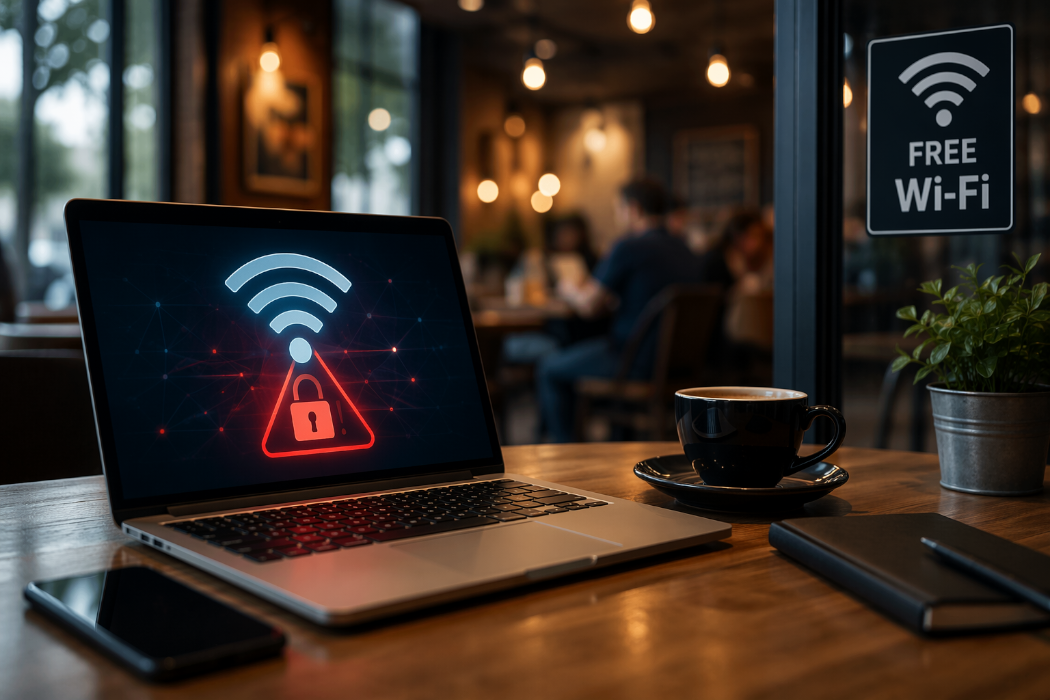
Public Wi Fi – Convenient, but is it Safe for Your Business?
We’ve all done it.
- Working from a café.
- Checking emails in a hotel lobby.
- Jumping on “Free Wi‑Fi” while waiting for a meeting.
It feels normal, convenient, and harmless.
But when it comes to cybersecurity, public Wi‑Fi is one of those things that sits firmly in the category of:
- Easy to use
- Easy to misuse
What Is Public Wi‑Fi (and Why Is It Different)?
Public Wi‑Fi is any internet connection that isn’t private to you or your business.
Examples include:
- Coffee shops
- Hotels
- Airports
- Trains
- Conference venues
The key difference is this – you’re sharing that network with people you don’t know and can’t trust. Unlike your office or home network, you have no control over:
- Who else is connected
- How secure the network is
- Whether someone is monitoring activity
So What’s the Risk?
Most people assume “It’s just internet access – what’s the worst that could happen?”
The reality is, public Wi‑Fi can expose your data in ways most people don’t expect:
- Someone could intercept your information
On an unsecured network, it’s possible for someone else to see data being transmitted – especially if it’s not properly encrypted. That could include:
- Login details
- Emails
- Documents
- Personal or customer data
- Fake Wi‑Fi networks exist
Cybercriminals can set up a network that looks legitimate, something like “Hotel Guest Wi‑Fi” or “Cafe Free Internet”. Connect to the wrong one, and your activity could be monitored without you realising.
- Devices can be exposed
Some networks allow connected devices to “see” each other. If your device isn’t properly secured, it could be discoverable to others on the same network.
- It only takes one login
Many cyber incidents don’t happen because of advanced hacking. They happen because:
- Someone logs into something important on an insecure connection
- Credentials are captured
- The attacker uses them later
Why This Matters for Business Owners
Public Wi‑Fi risks aren’t just personal – they can impact your business directly.
For example:
- Logging into your email could expose your entire inbox
- Accessing your CRM could expose customer data
- Signing into financial systems could create serious risk
And remember, it’s not always immediate. You might use public Wi‑Fi today and not realise there’s a problem until weeks later.
“Surely This Is Protected Already?”
To a degree, yes – modern devices and websites are more secure than they used to be. But:
- Not everything is encrypted
- Not every network is trustworthy
- Not every system has additional protection
- And human behaviour (what we click or access) still matters
So while risk is reduced, it’s definitely not eliminated.
How to Stay Safe on Public Wi‑Fi
You don’t need to avoid public Wi‑Fi completely just use it more carefully. Here are some simple habits that make a big difference:
- Avoid sensitive activity
Don’t log into critical systems (banking, email, business platforms) unless you really need to.
- Use mobile data where possible
If something matters, your phone’s data connection is usually safer than public Wi‑Fi.
- Use a VPN (Virtual Private Network)
A VPN encrypts your connection, making it much harder for anyone to intercept your data. You don’t need to understand the technical side – just think of it as a secure tunnel for your internet traffic.
- Double‑check the network name
Ask staff for the correct Wi‑Fi network where possible – don’t just connect to the first one that looks right.
- Turn off automatic connections
Many devices connect automatically to known networks. This can be risky if a fake network uses the same name.
- Keep devices updated
Updates often include security improvements that help protect you on untrusted networks.
- Use multi‑factor authentication
Even if someone does get your password, MFA can stop them accessing your accounts.
A Simple Way to Think About It
Public Wi‑Fi isn’t “bad” – it’s just uncontrolled. And in cybersecurity, lack of control = increased risk.
Final Thoughts
Public Wi‑Fi is one of those everyday risks that quietly sits in the background of how we work. It’s not about panic or avoidance – it’s about awareness. A few small changes in behaviour can massively reduce the chance of something going wrong.
Because in most cases, cyber incidents don’t come from complex attacks. They come from normal actions in the wrong environment.